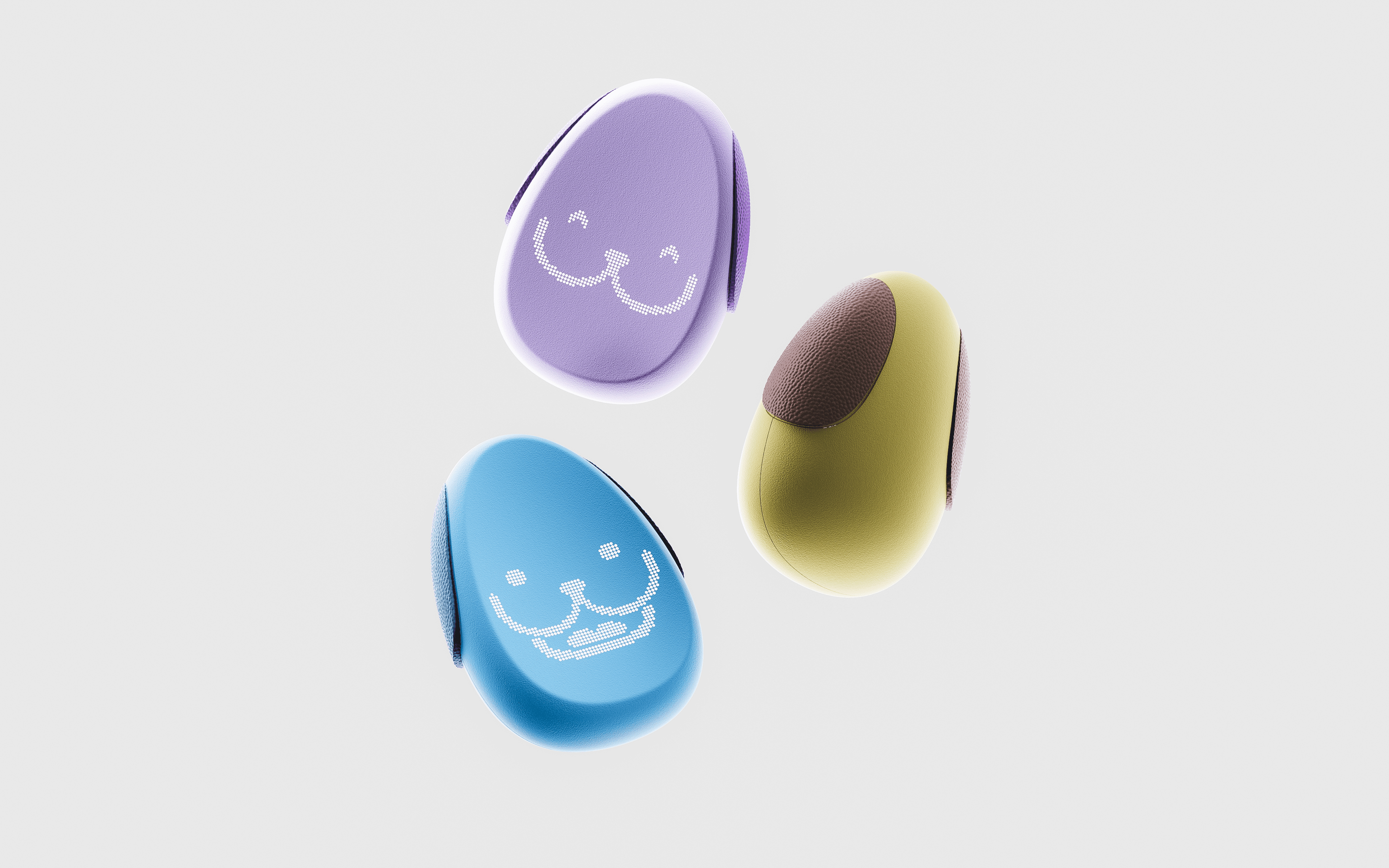
How Can We Help Neurodivergent
Children Manage their Emotions?
4 Weeks | 150 Hours | 2023
Skills | User Research, User Experience, Iteration, Ergonomics
Software | Solidworks, Keyshot, Adobe Suite
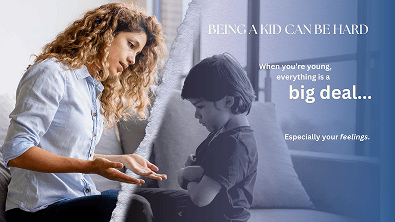
Emotions can overwhelm.
Neurodivergent children often face many obstacles that make learning emotional regulation challenging.
Executive Function Deficits

Executive Function Deficits
Impaired cognitive management. Manifests as difficulty with working memory, impulse control, emotional regulation, task initiation, and shifting attention between activities.
Interoceptive Hyposensitivity

Interoceptive Hyposensitivity
Reduced awareness of internal bodily sensations. Manifests as failing to recognize hunger, pain, or emotional escalation until physiological signals become extreme.
Delayed Processing Speed

Delayed Processing Speed
Slower intake, comprehension, and response to information. A neurological bottleneck in executing tasks or reacting to stimuli
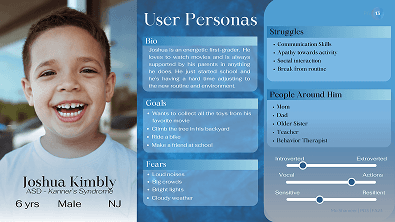
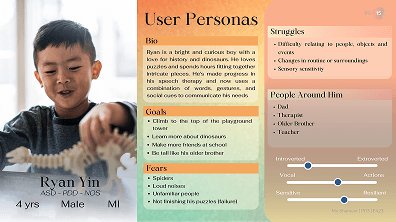
Synthesizing Academic Journals + SME Interviews = Insights
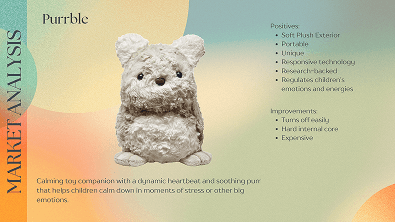
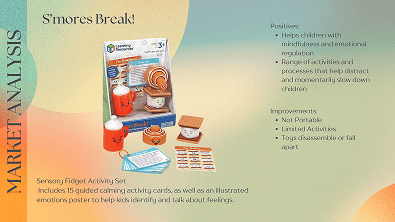
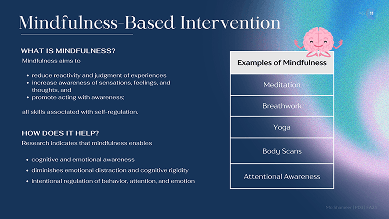
Synthesis of medical literature and Subject Matter Expert (SME) interviews established the design foundation. Input from neurodivergent development clinics informed functional requirements.
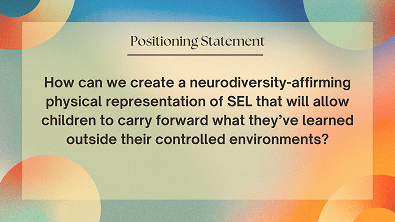
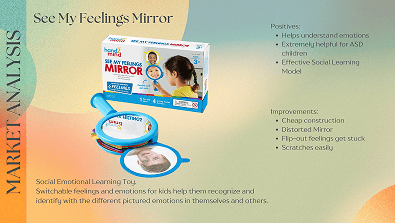
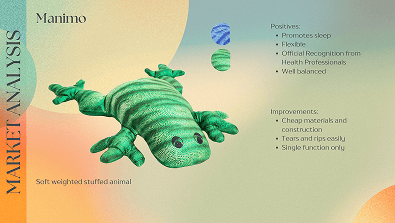
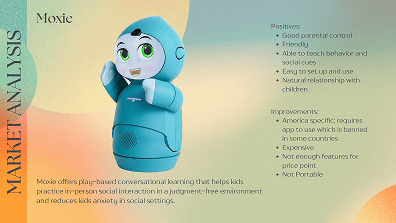
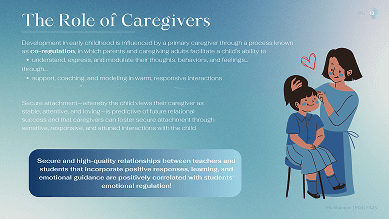
Design Criteria
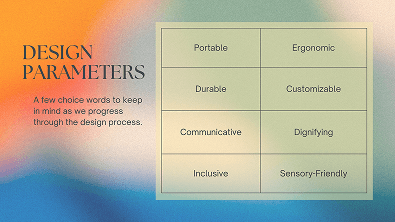
Design Criteria
Anticipate
Anticipate
Utilize and externalize psychological warning signs
Utilize and externalize psychological warning signs
Redirect
Redirect
Guide children through regulation exercises and skills
Guide children through regulation exercises and skills
Connect
Connect
Provide a patient and safe space for children and parents
Provide a patient and safe space for children and parents
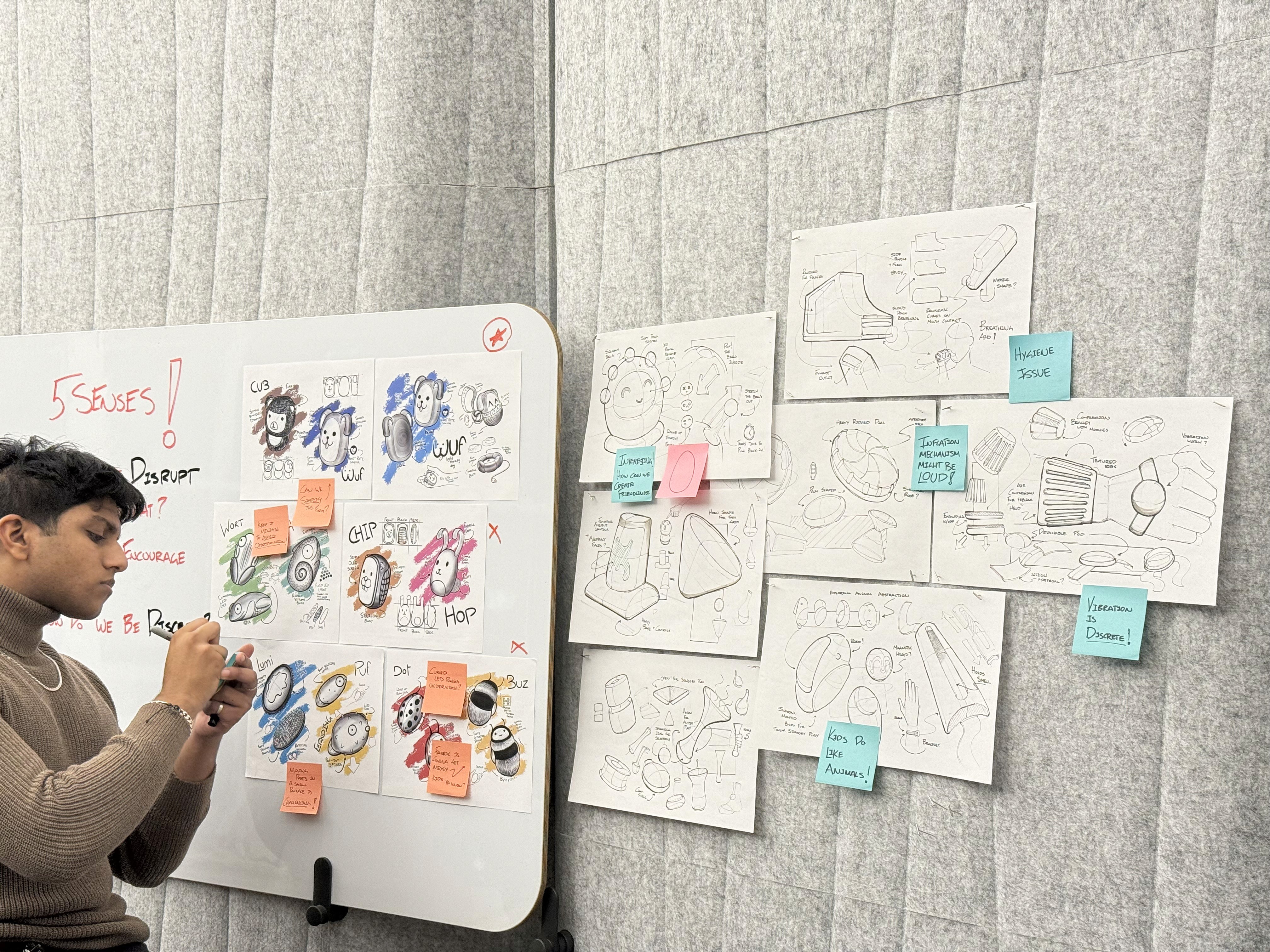
Concept Generation Focusing on Sensory Input
Ideation explored sensory inputs to interrupt emotional momentum. A sort of cognitive brake for regulation.
Translating Form and Function into A "Character"
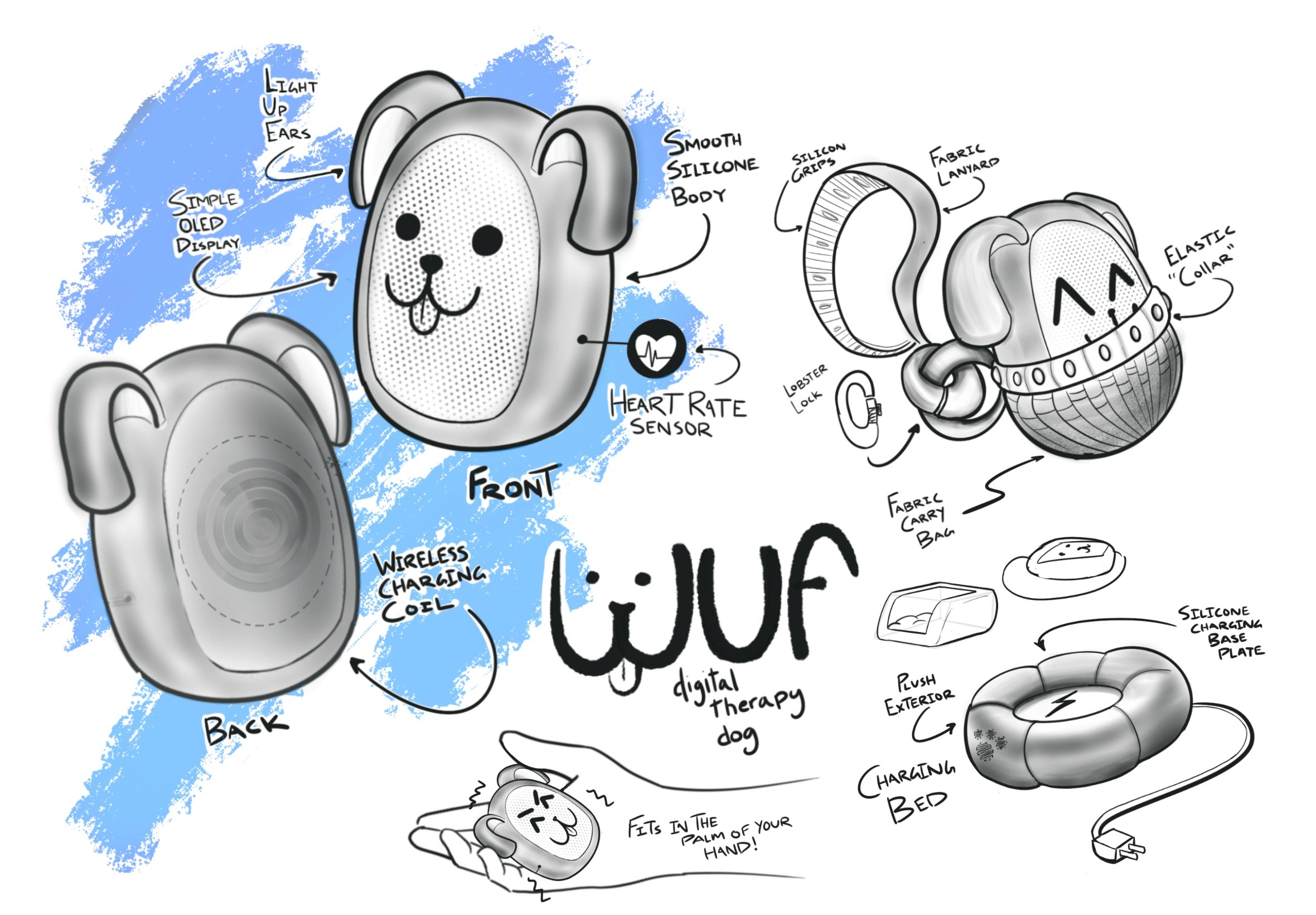
Pulsing vibrations guided breathing to provide private, accessible emotional regulation. A dog form factor converted the functional tool into a friendly companion.
Focusing Form Direction Through User Testing
Testing confirmed a preference for smooth pebble forms. Instinctive rubbing of the device face signaled a need for tactile variety. These insights informed final iterations.
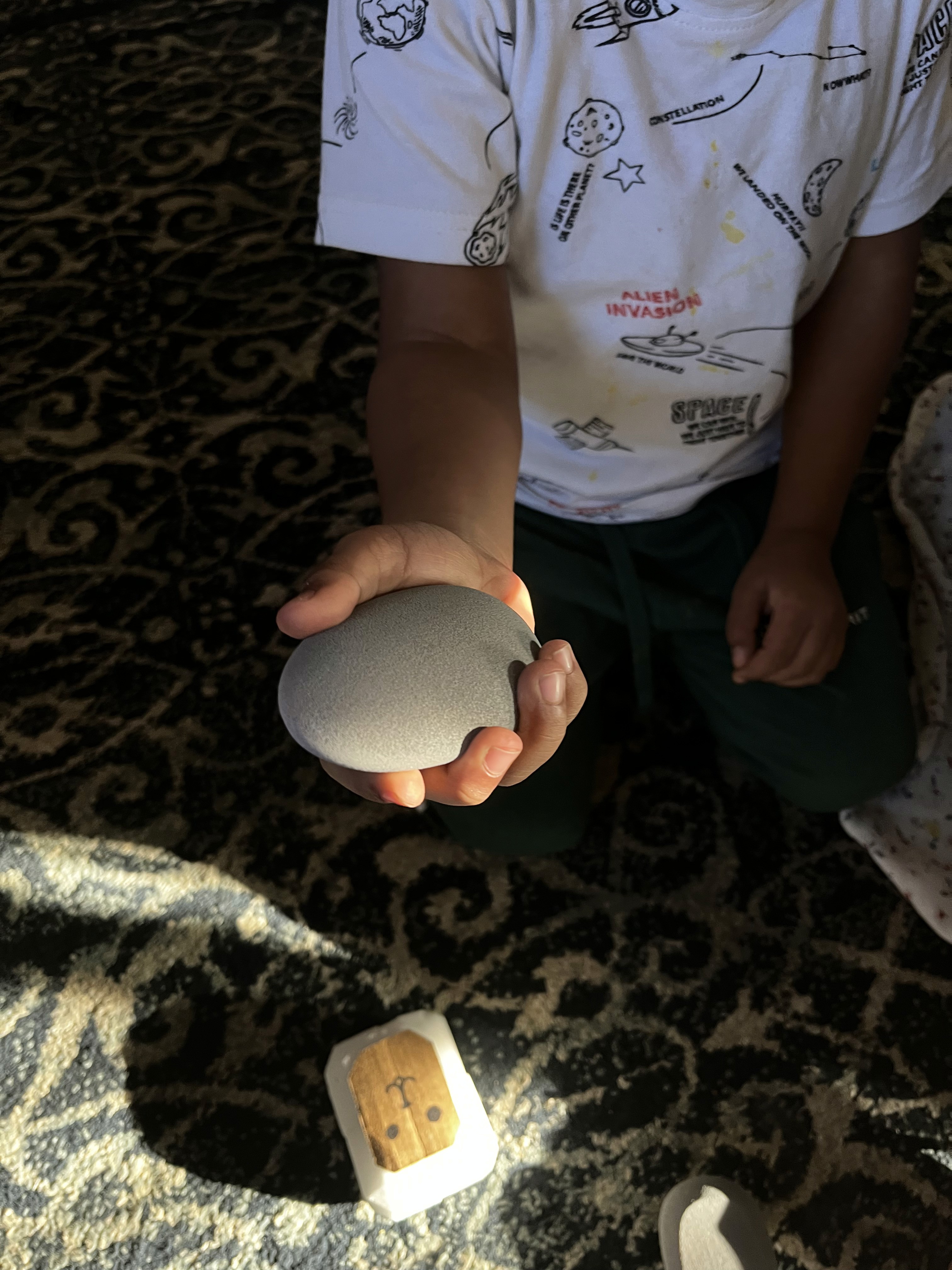
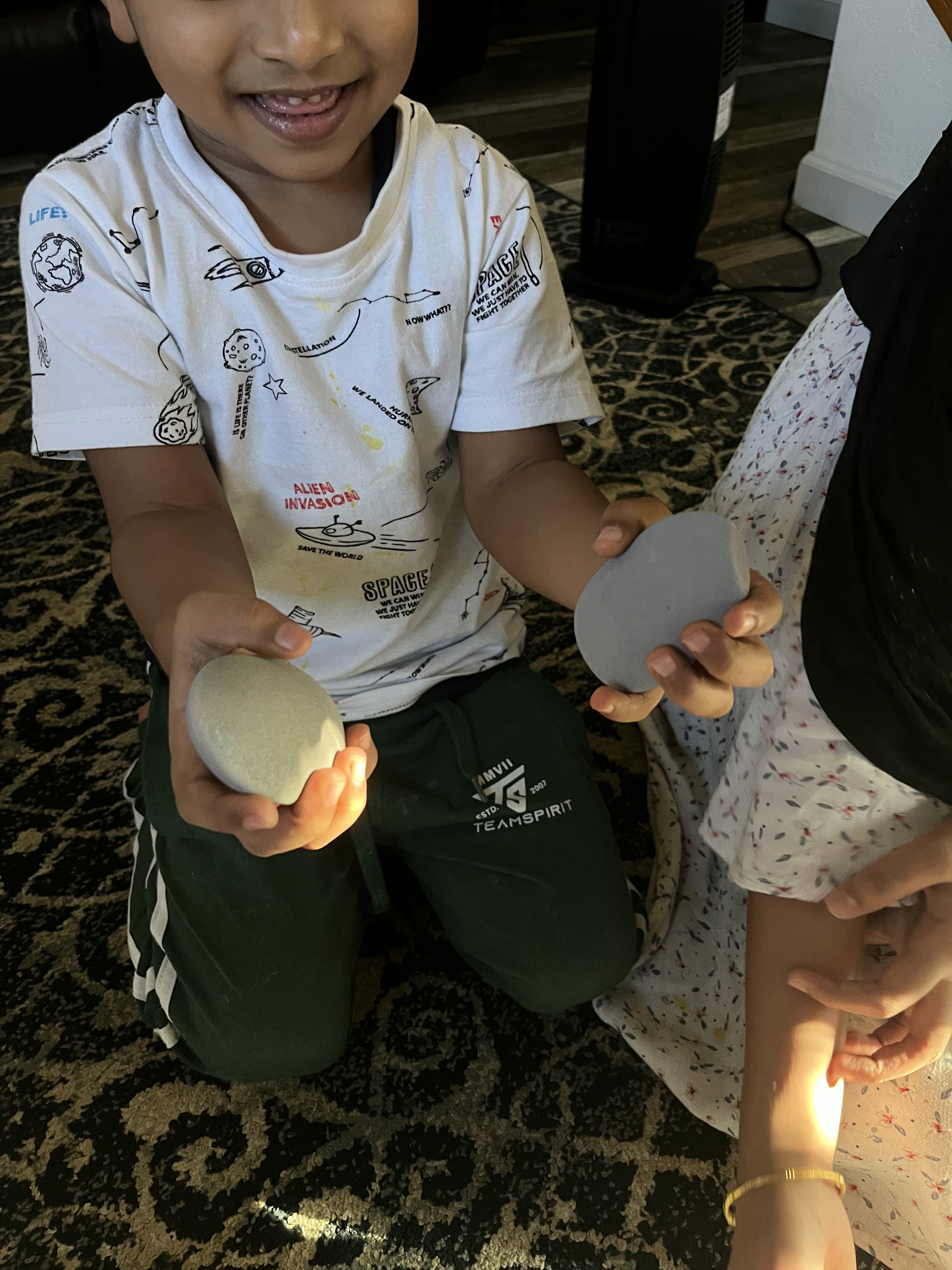
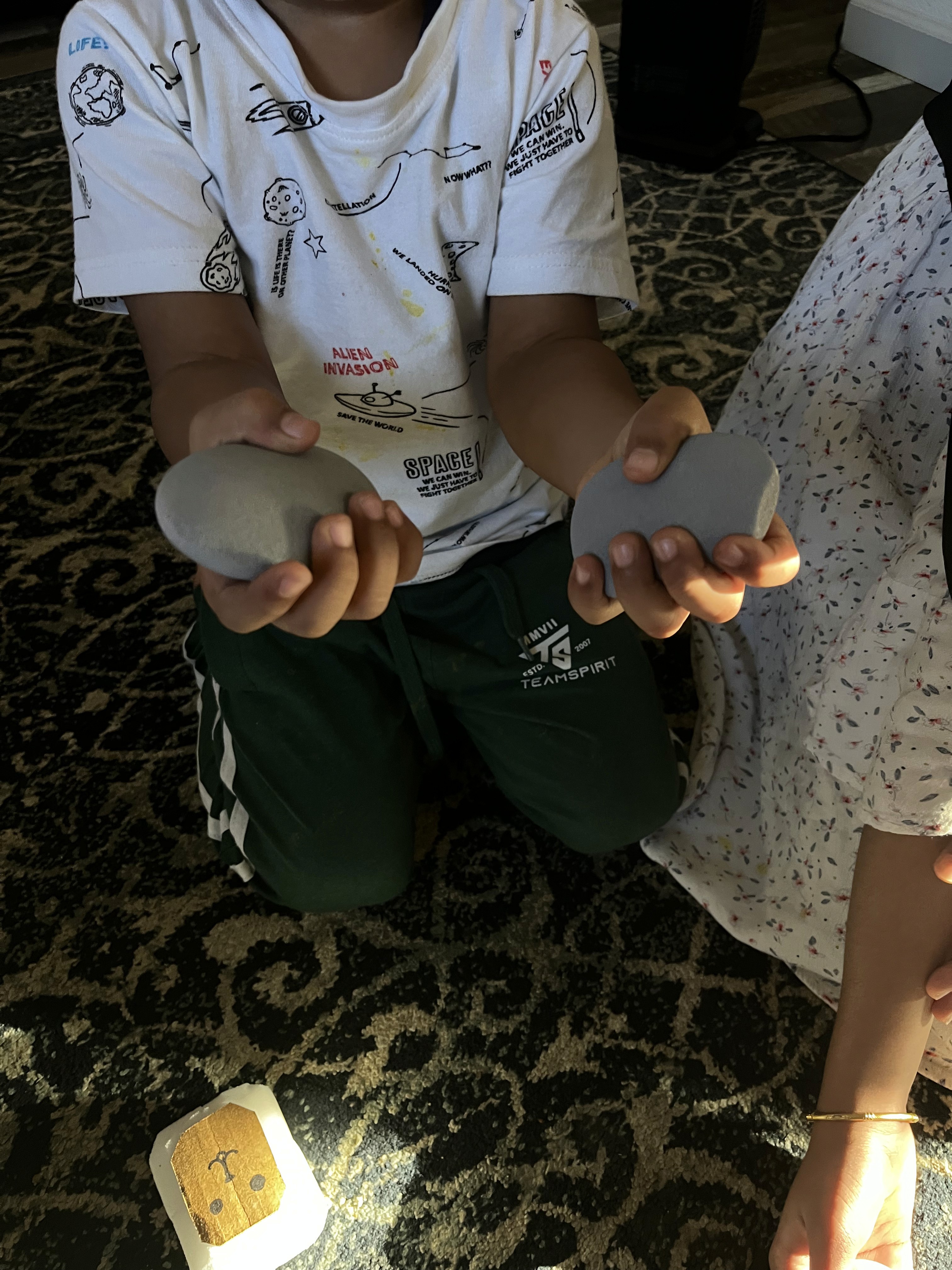
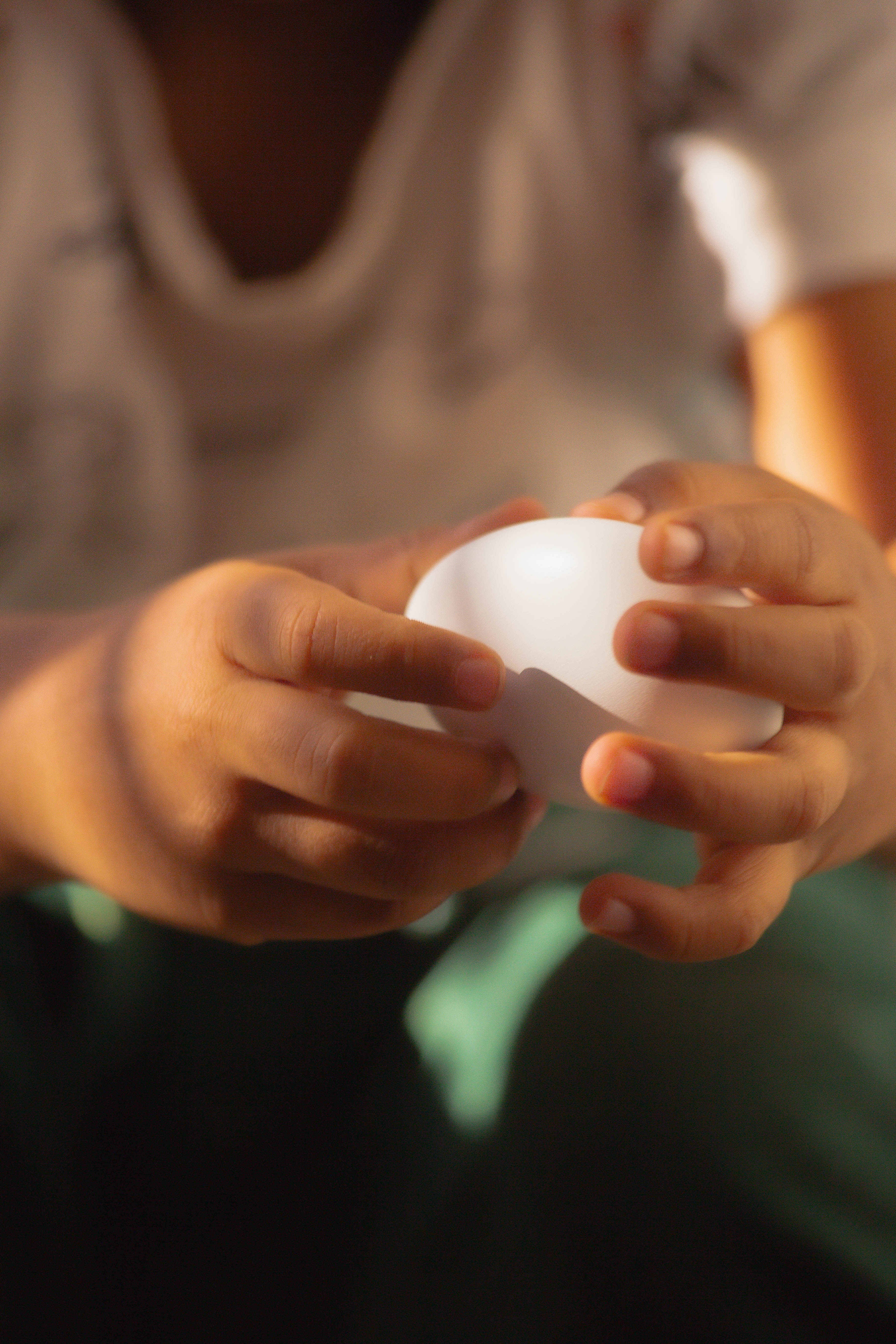
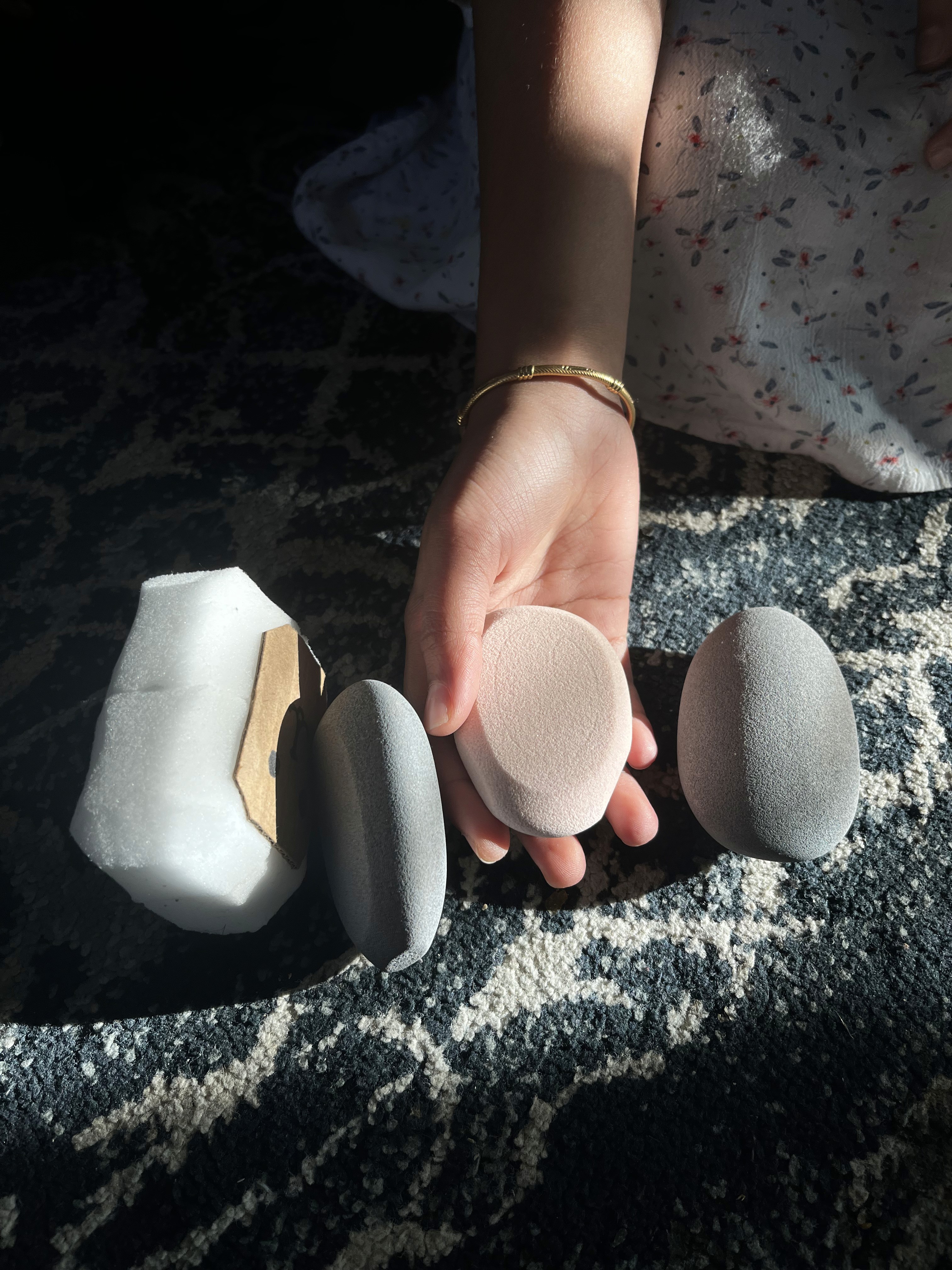
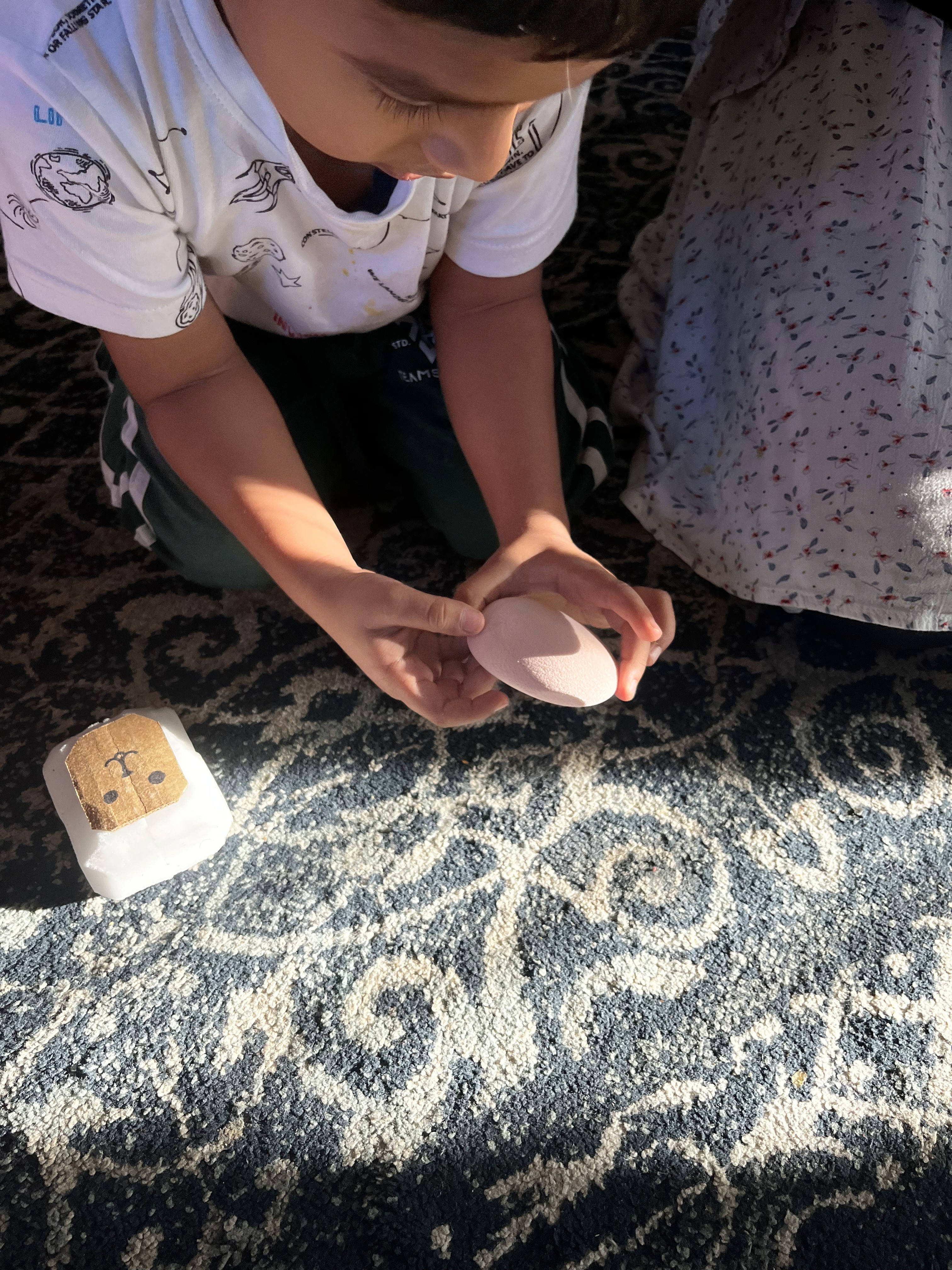
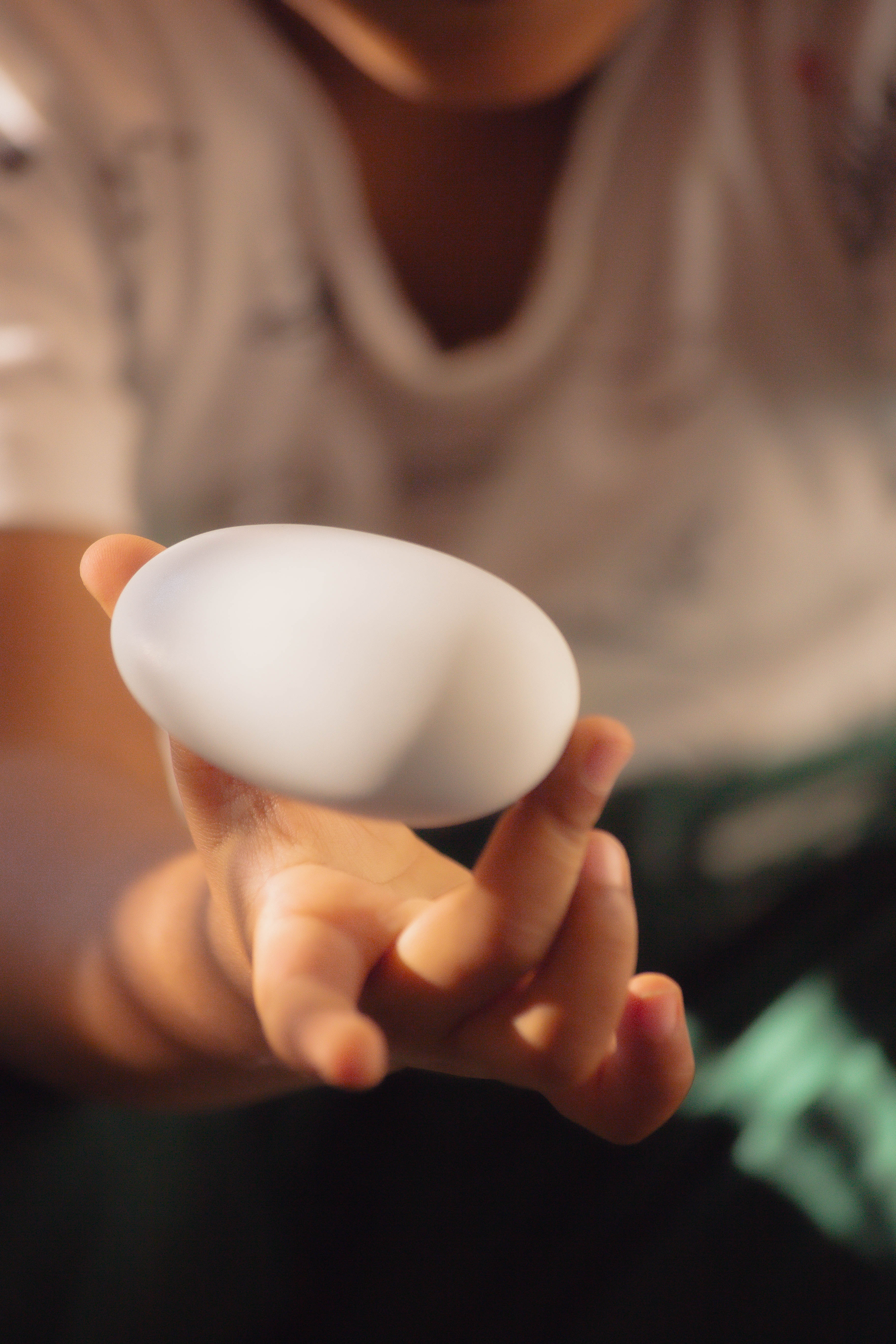
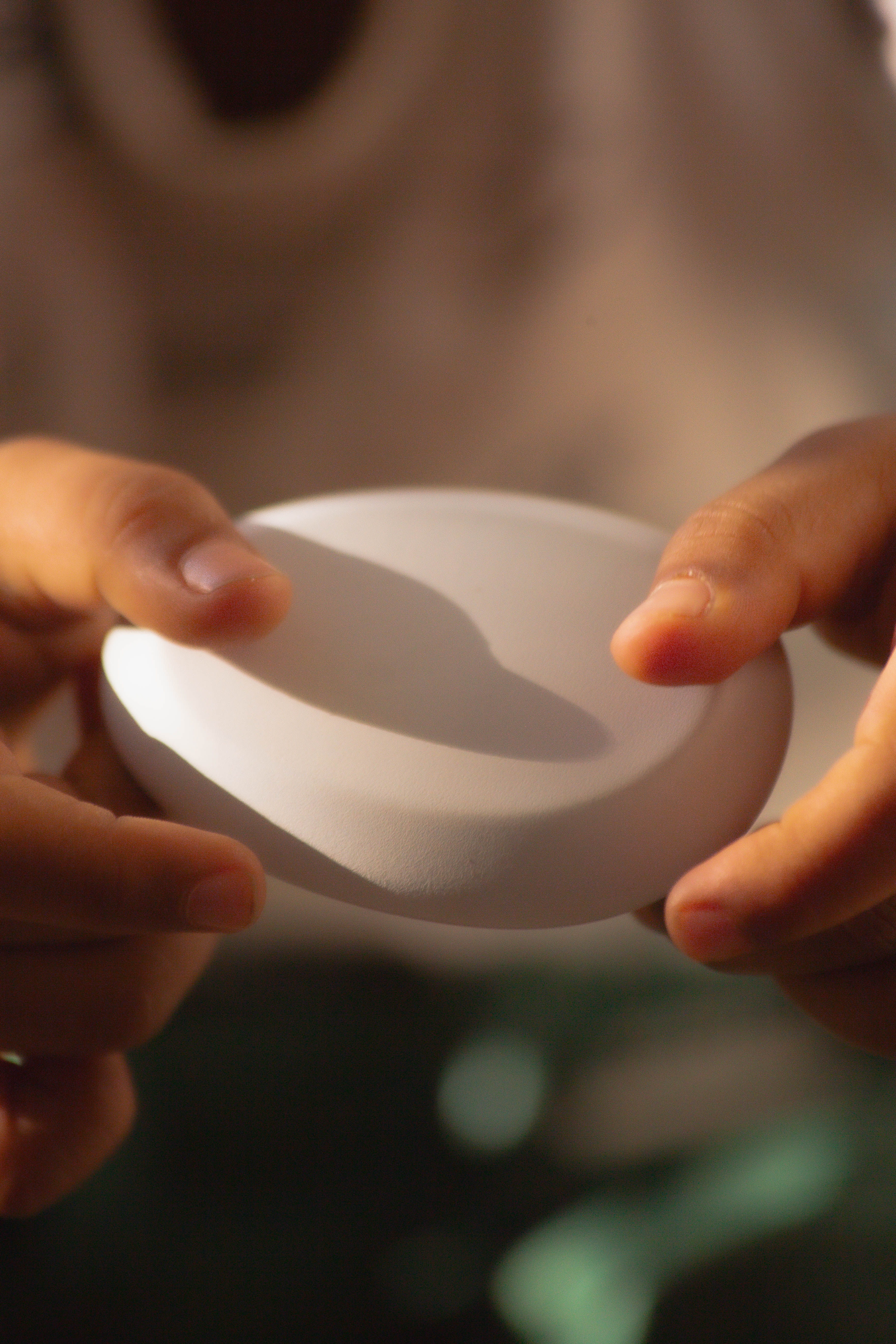
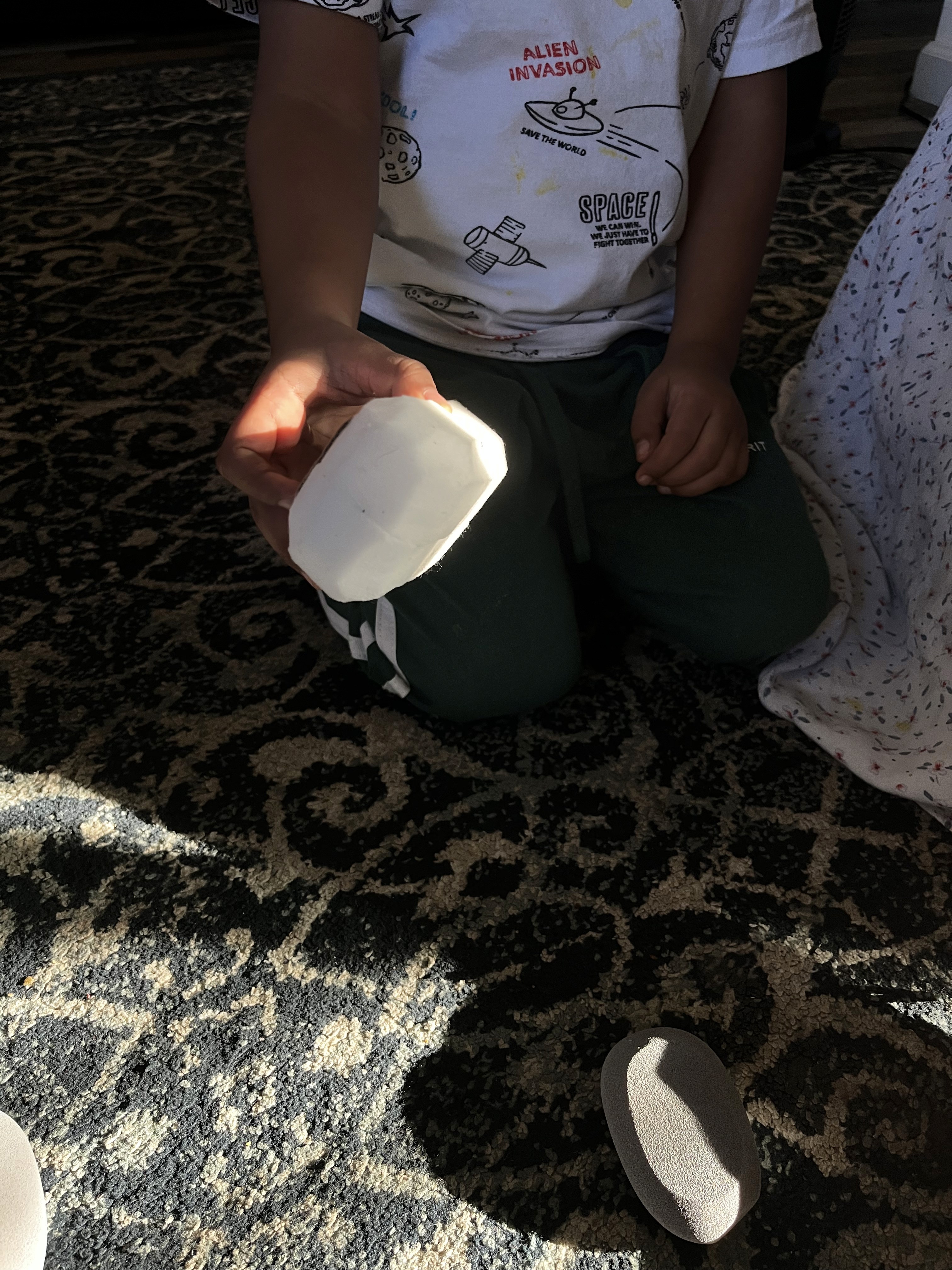
Haptics Test + Form Iteration
Alongside form iteration, I gave myself a crash course in electrical engineering and coding to mock up a tech demo with a vibration motor and a simple LCD screen.
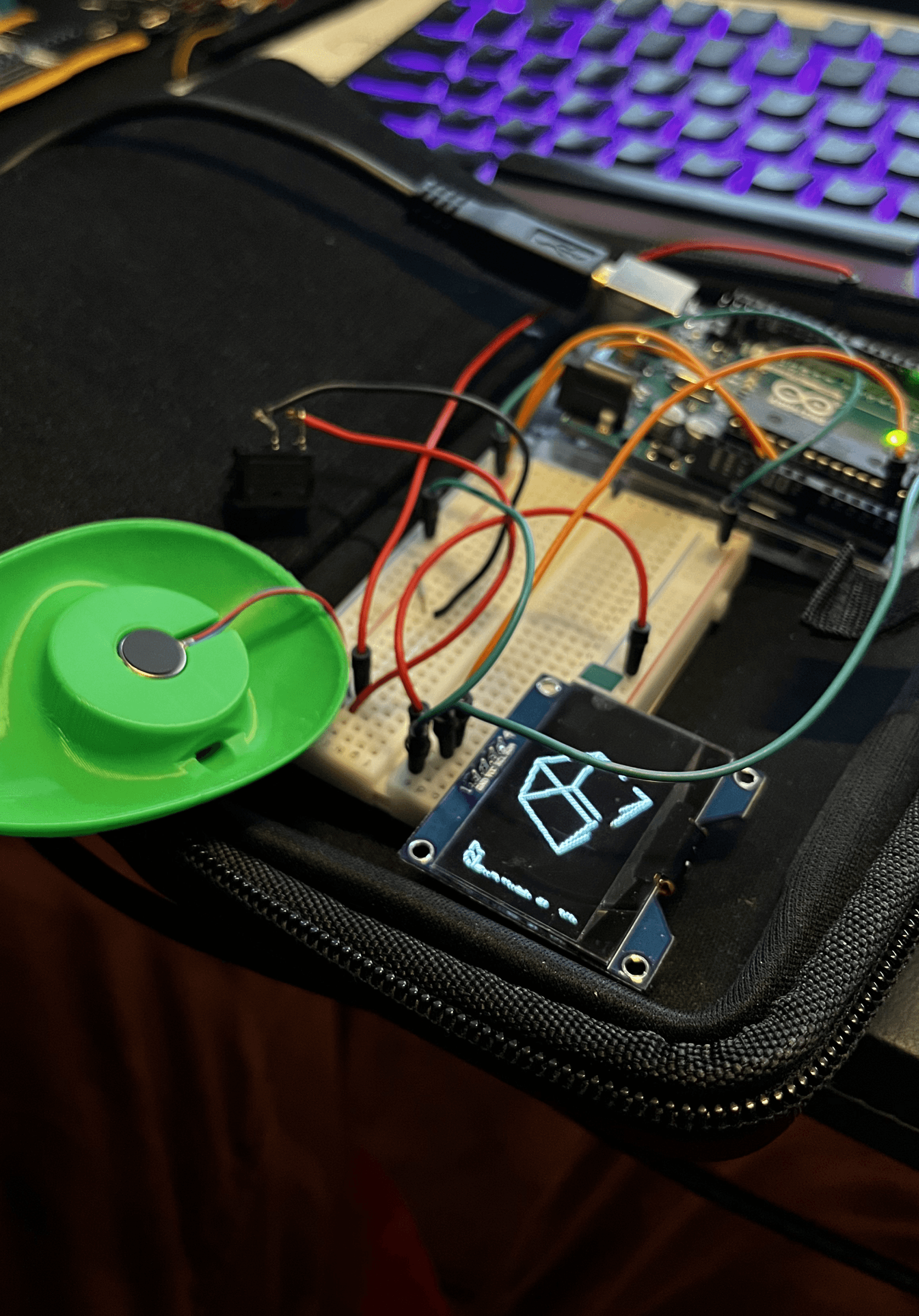
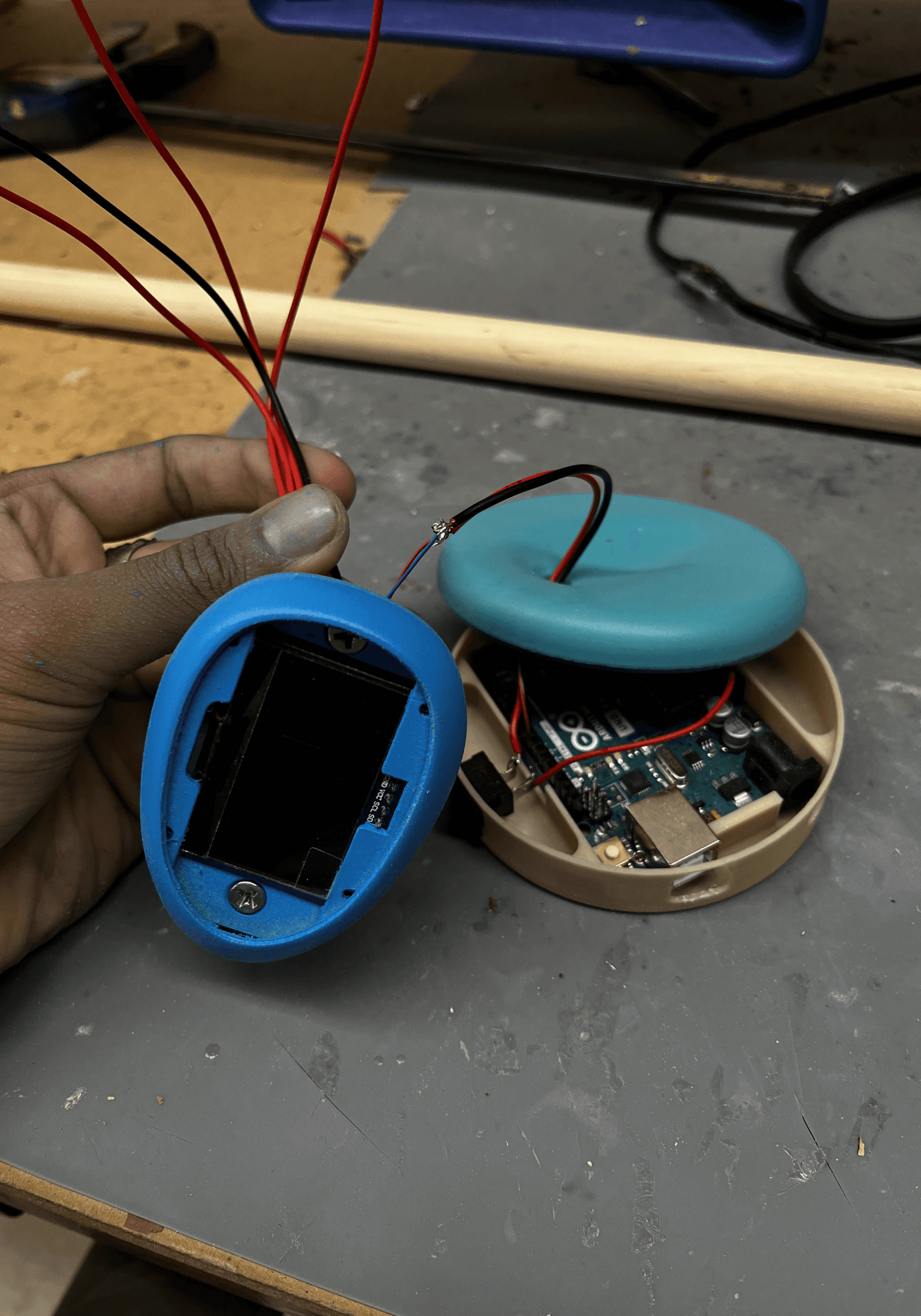
Functional Prototyping to Validate Interaction Concept
Functional prototyping was utilized to validate the technical concept beyond surface aesthetics. This high-fidelity model generated significant project impact
User Feedback to
Final Form Iteration
Testing confirmed a preference for smooth pebble forms. Instinctive rubbing of the device face signaled a need for tactile variety. These insights informed final iterations.
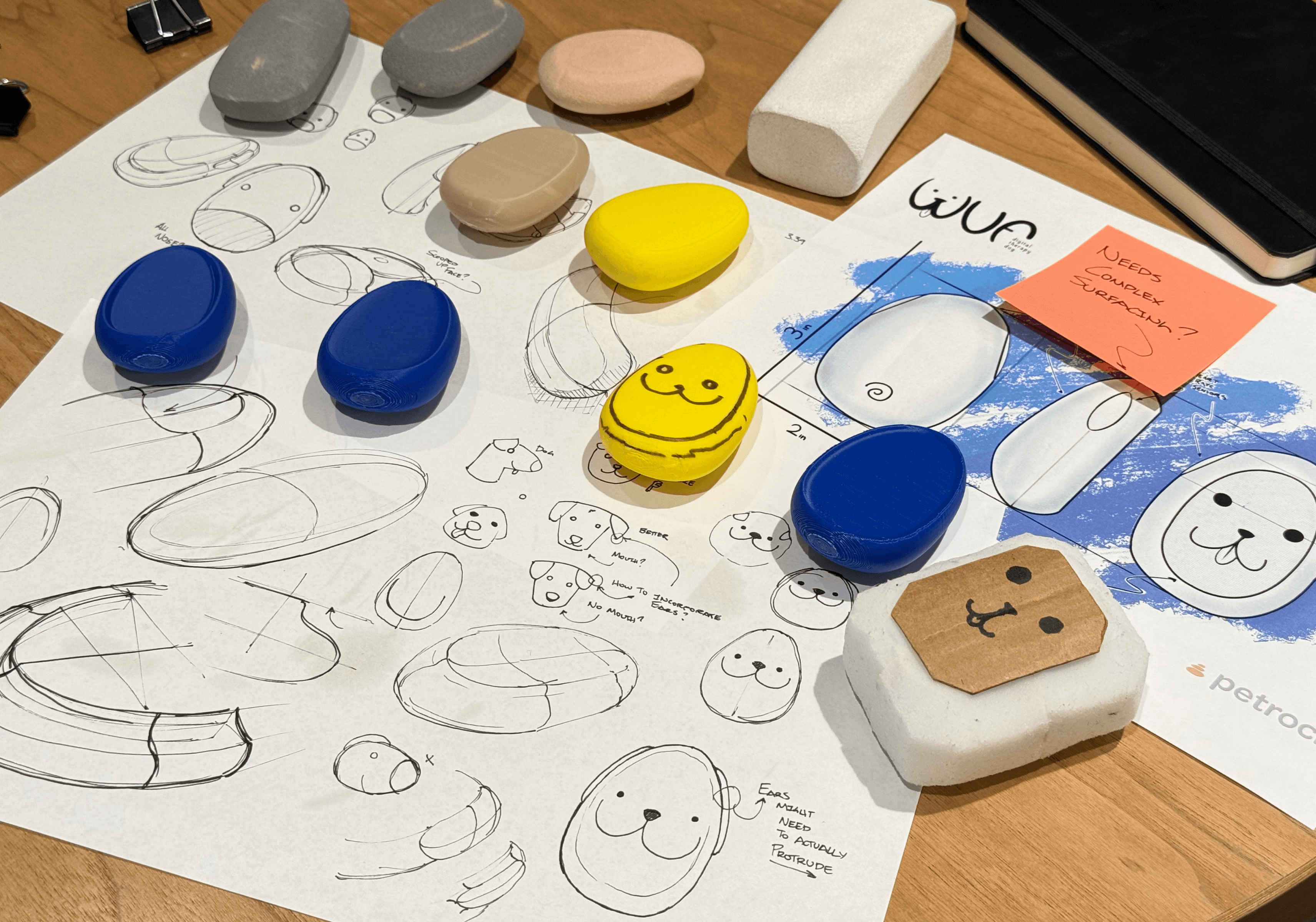
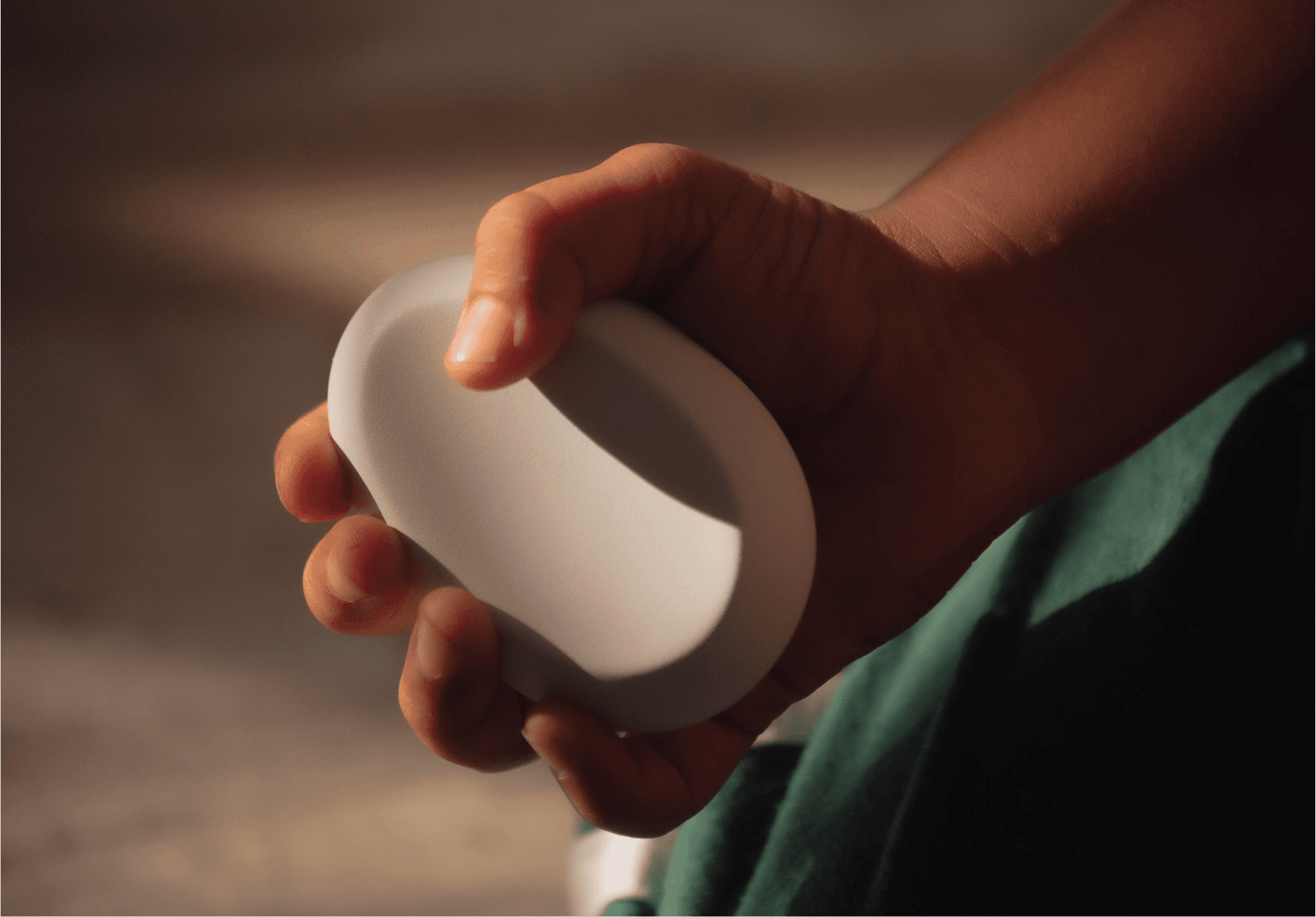
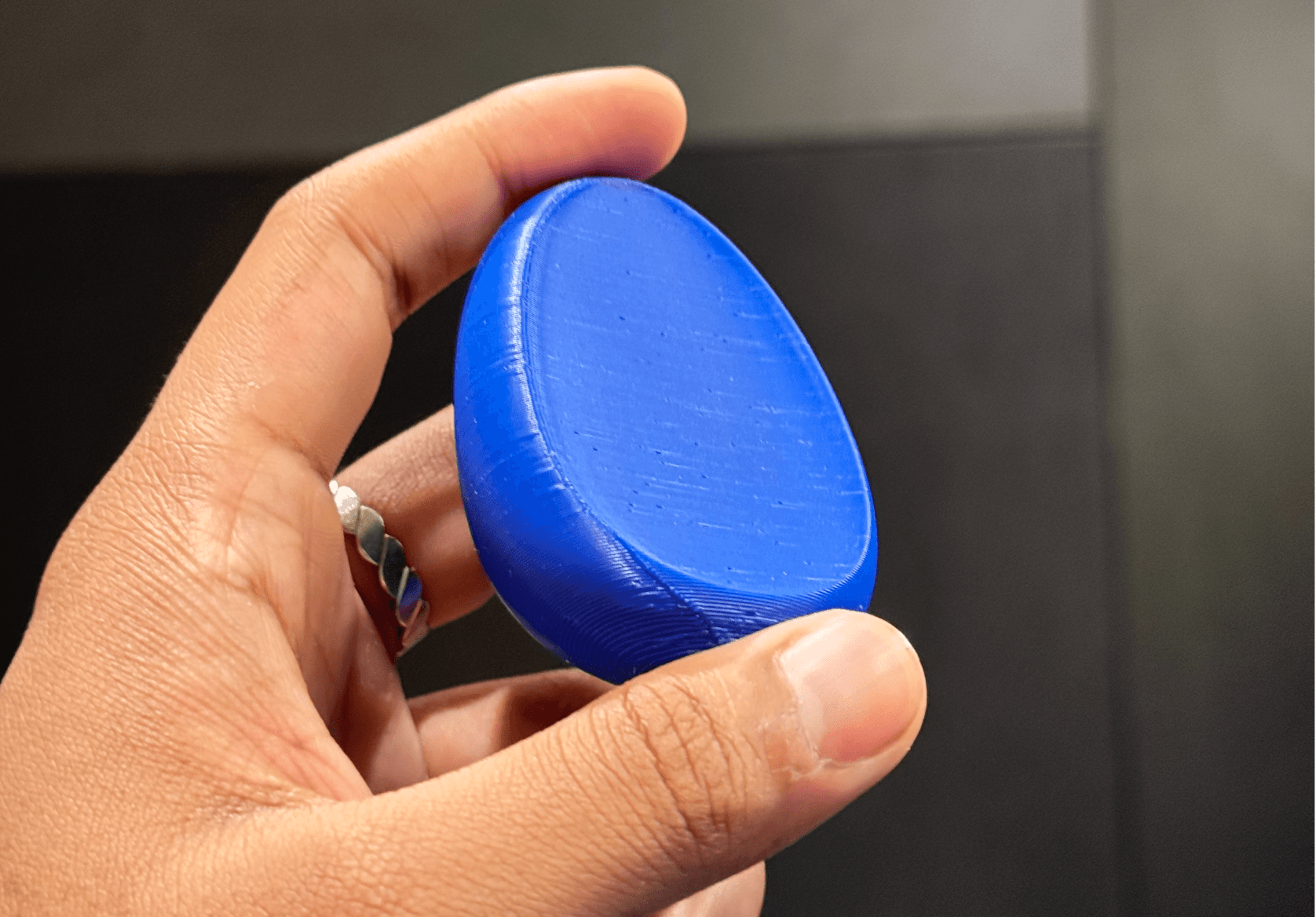
Concave Surface Encourages Self-Soothing.
Users instinctively rubbed their thumbs across the pebble form. WUF’s concave face accommodates and accentuates this subconscious action.
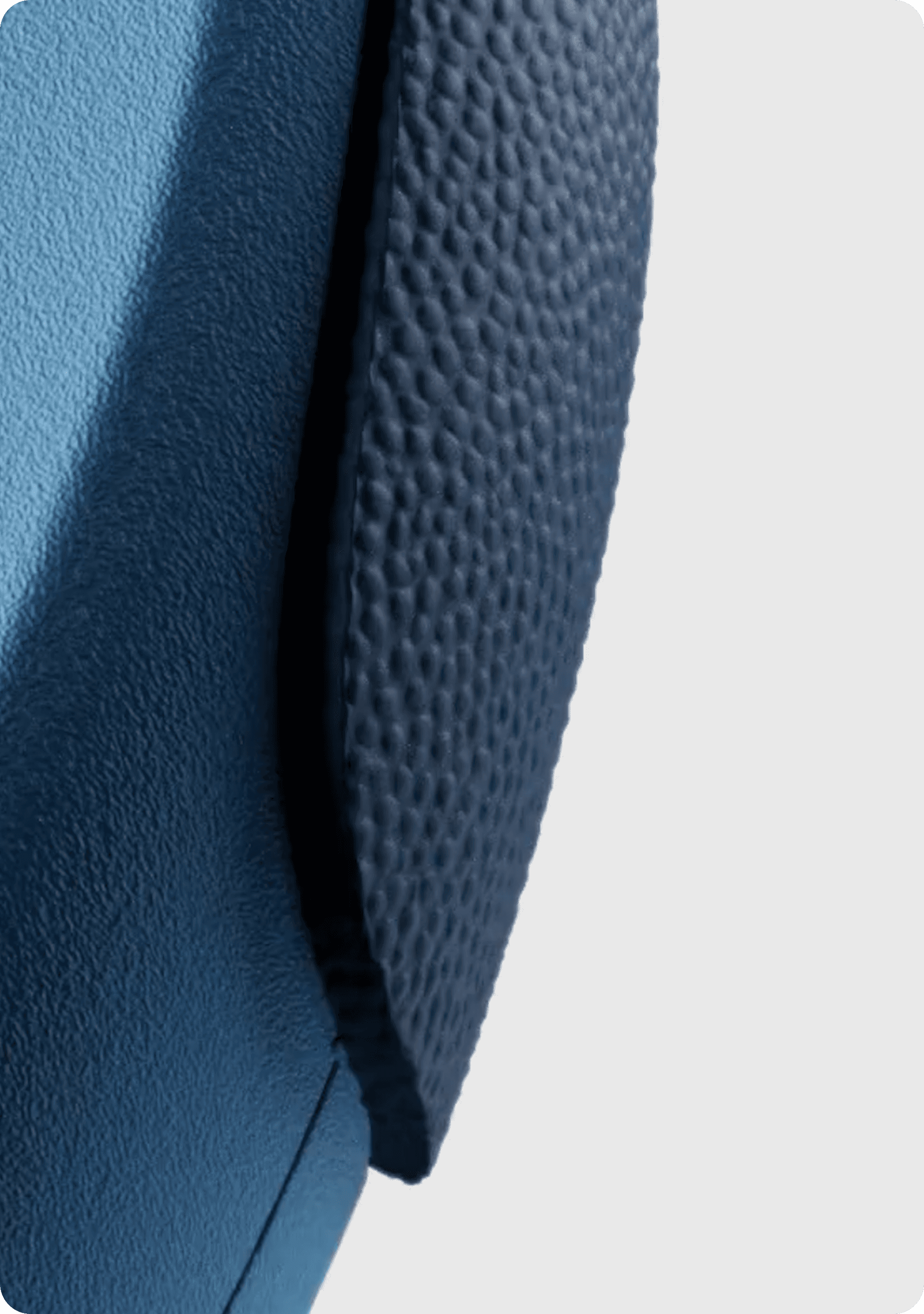
Sharp ears contrast with the broader form language. Silicone construction and stippled textures provide varied tactile feedback.
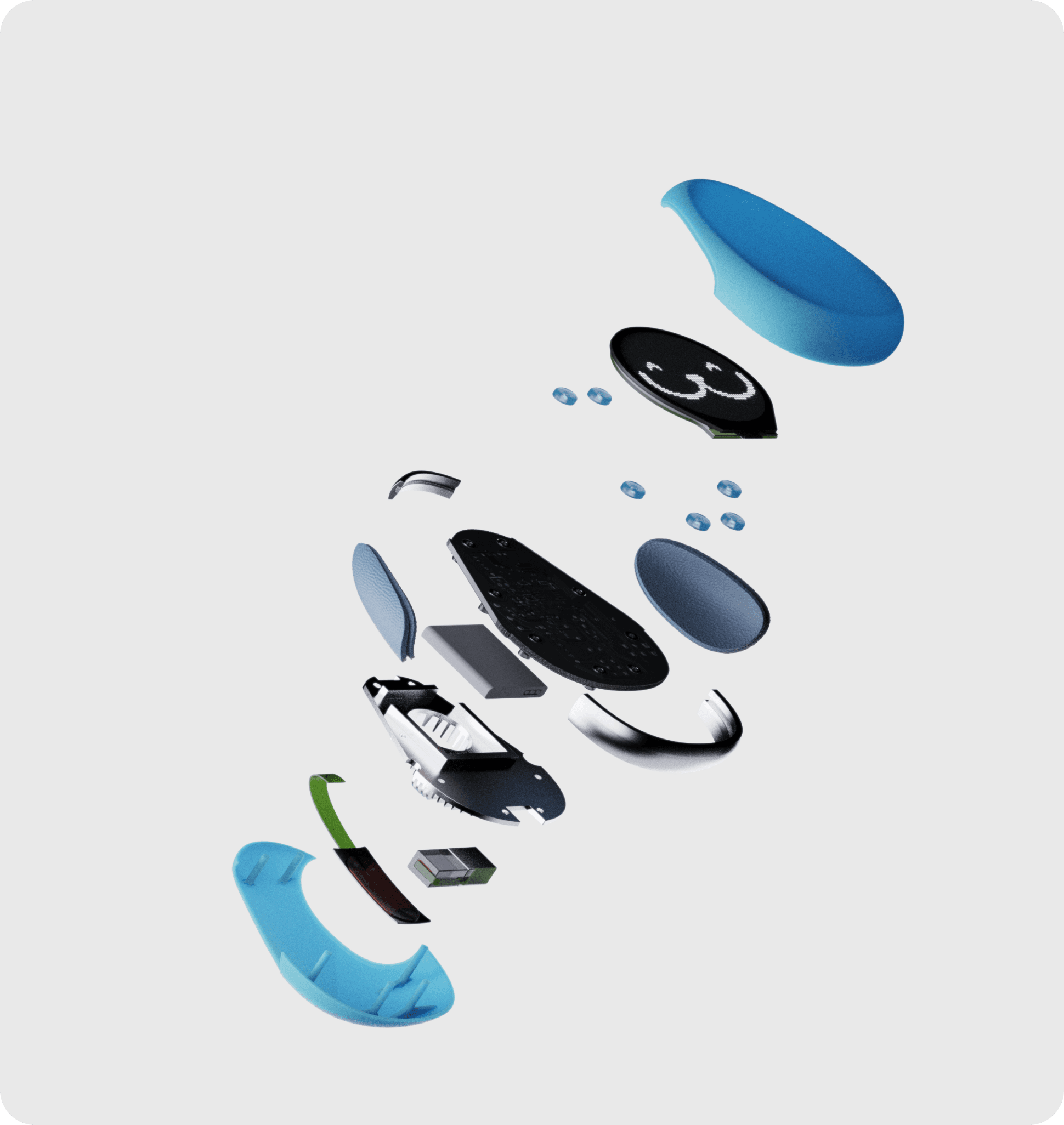
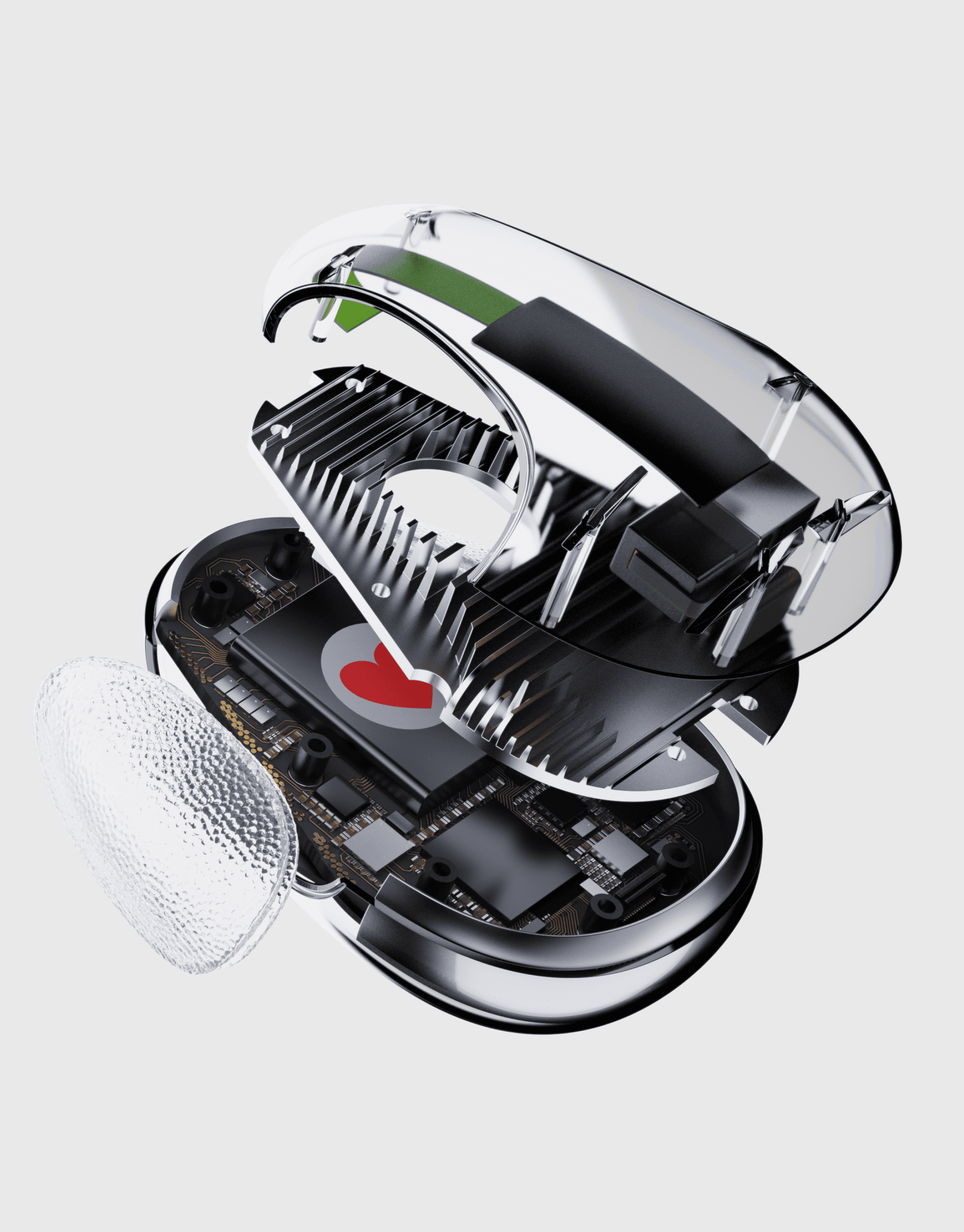
Silicone overmolds an ABS core with injection-molded ears. Top-down assembly secures components using internal pegs and aluminum reinforcement.
Assembly Architecture and Component Stack
MEMS microphones and motion sensors detect audio cues and movement patterns. An aluminum heat sink manages thermal output while establishing a premium weight and presence.

1. Dysregulation
Emotional dysregulation triggers crying, screaming, or heavy breathing.
Neurodivergent users use motor stimming (repetitive physical movements) and vocal stimming (repetitive sounds or phrases) during these episodes.

2. Auto Activation
WUF detects dysregulation through auditory and motion inputs, initiating automatic activation.
3. Distraction
Vibrations attract the child and guide them to the device.
A barking animation on the face encourages interaction.
4. Engagement
Physical contact or consistent pressure triggers therapeutic vibration patterns.
The animated face cycles through breathing visuals to guide inhalation and exhalation.
Combined haptic, visual, and tactile stimuli synchronize user breathing and redirect cognitive focus.

5. Regulation
Stability detection triggers automatic deactivation. The system enters standby, ready for the next activation.
5. Connection
Parents receive a notification of when their child has experienced disregulation.
This prompts an open communication between child and caregiver.
How Can We Help Neurodivergent
Children Manage Their Emotions?
4 Weeks | 150 Hours | 2023
Skills | User Research, User Experience, Iteration, Ergonomics
Software | Solidworks, Keyshot, Adobe Suite
4 Weeks | 150 Hours | 2023
Skills | User Research, User Experience, Iteration, Ergonomics
Software | Solidworks, Keyshot, Adobe Suite
Emotions can overwhelm.
Neurodivergent children often face many obstacles that make learning emotional regulation challenging.
Executive Function Deficits
Executive Function Deficits
Impaired cognitive management. Manifests as difficulty with working memory, impulse control, emotional regulation, task initiation, and shifting attention between activities.
Interoceptive Hyposensitivity
Interoceptive Hyposensitivity
Reduced awareness of internal bodily sensations. Manifests as failing to recognize hunger, pain, or emotional escalation until physiological signals become extreme.
Delayed Processing Speed
Delayed Processing Speed
Slower intake, comprehension, and response to information. A neurological bottleneck in executing tasks or reacting to stimuli
Haptics Test + Form Iteration
Alongside form iteration, I gave myself a crash course in electrical engineering and coding to mock up a tech demo with a vibration motor and a simple LCD screen.
Synthesizing Academic Journals + SME Interviews = Insights
Synthesis of medical literature and Subject Matter Expert (SME) interviews established the design foundation. Input from neurodivergent development clinics informed functional requirements.
Concept Generation Focusing on Sensory Input
Ideation explored sensory inputs to interrupt emotional momentum. A sort of cognitive brake for regulation.
Translating Form and Function into A "Character"
Pulsing vibrations guided breathing to provide private, accessible emotional regulation. A dog form factor converted the functional tool into a friendly companion.
Focusing Form Direction Through User Testing
Testing confirmed a preference for smooth pebble forms. Instinctive rubbing of the device face signaled a need for tactile variety. These insights informed final iterations.
User Feedback to
Final Form Iteration
Testing confirmed a preference for smooth pebble forms. Instinctive rubbing of the device face signaled a need for tactile variety. These insights informed final iterations.
Functional Prototyping to Validate Interaction Concept
Functional prototyping was utilized to validate the technical concept beyond surface aesthetics. This high-fidelity model generated significant project impact
Edge AI + Data Ethics
Ethically sourced AI models detect dysregulation using audio and motion data. Lightweight AI architecture ensures entirely offline operation.
Check out the link below for an example of how audio and speech data sets can be utilized to understand emotion and psychology.
Assembly Architecture and Component Stack
MEMS microphones and motion sensors detect audio cues and movement patterns. An aluminum heat sink manages thermal output while establishing a premium weight and presence.
Silicone overmolds an ABS core with injection-molded ears. Top-down assembly secures components using internal pegs and aluminum reinforcement.
Concave Surface Encourages Self-Soothing.
Users instinctively rubbed their thumbs across the pebble form. WUF’s concave face accommodates and accentuates this subconscious action.
Sharp ears contrast with the broader form language. Silicone construction and stippled textures provide varied tactile feedback.
1. Dysregulation
Emotional dysregulation triggers crying, screaming, or heavy breathing.
Neurodivergent users use motor stimming (repetitive physical movements) and vocal stimming (repetitive sounds or phrases) during these episodes.
2. Auto Activation
WUF detects dysregulation through auditory and motion inputs, initiating automatic activation.
3. Distraction
Vibrations attract the child and guide them to the device.
A barking animation on the face encourages interaction.
4. Engagement
Physical contact or consistent pressure triggers therapeutic vibration patterns.
The animated face cycles through breathing visuals to guide inhalation and exhalation.
Combined haptic, visual, and tactile stimuli synchronize user breathing and redirect cognitive focus.
5. Regulation
Stability detection triggers automatic deactivation. The system enters standby, ready for the next activation.
5. Connection
Parents receive a notification of when their child has experienced disregulation.
This prompts an open communication between child and caregiver.
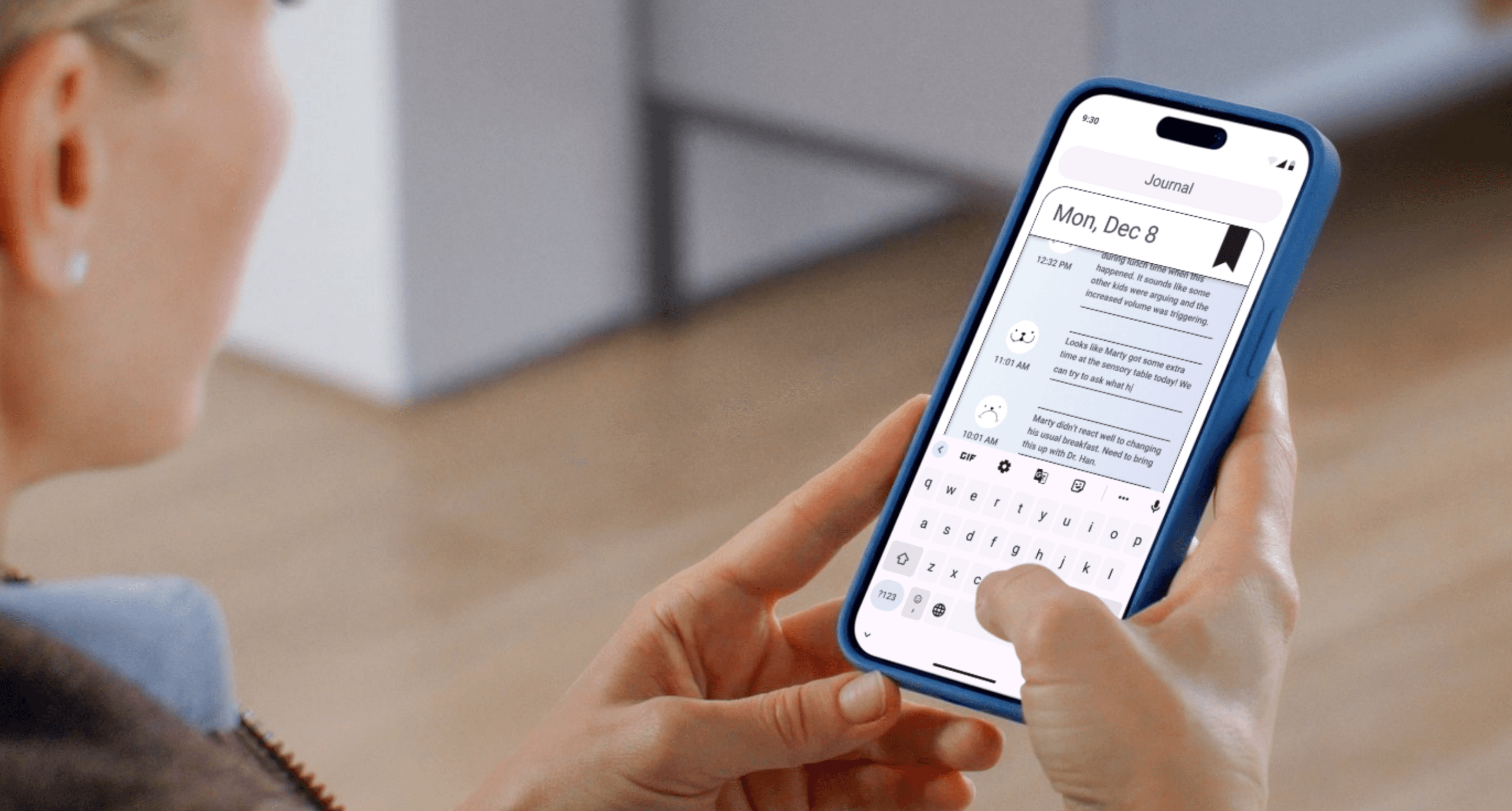
Data Privacy + Customization through WUF App
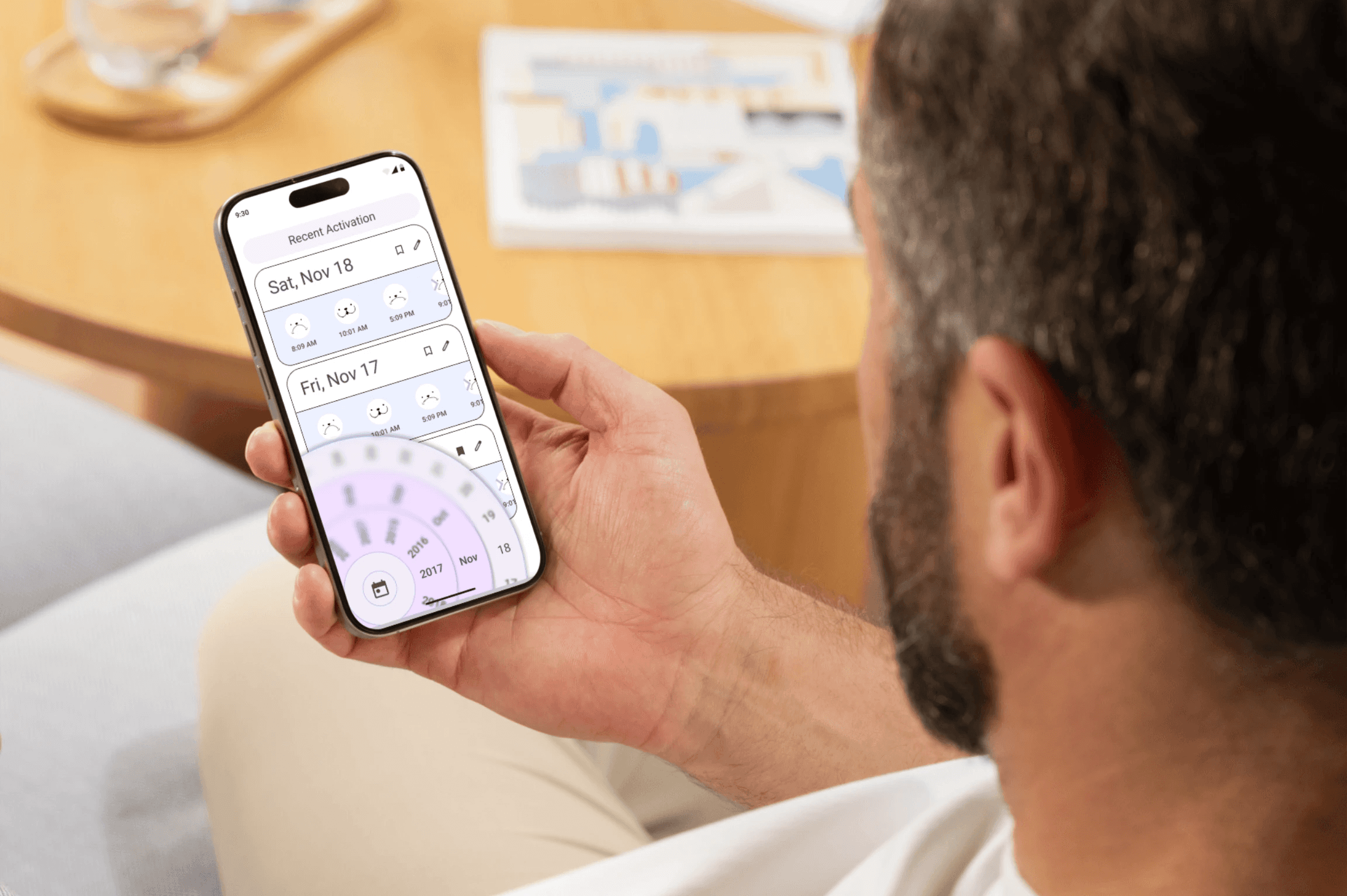
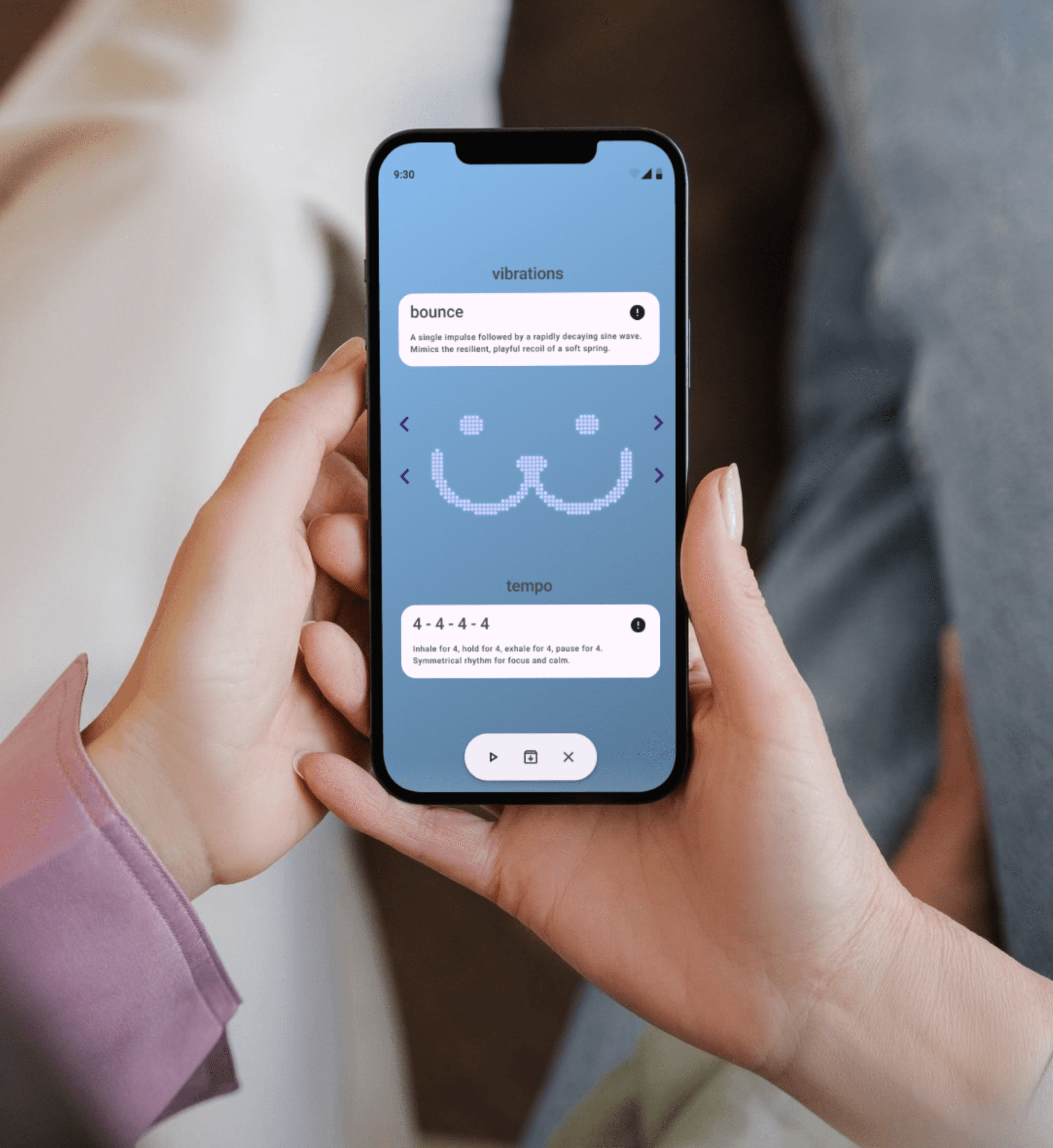
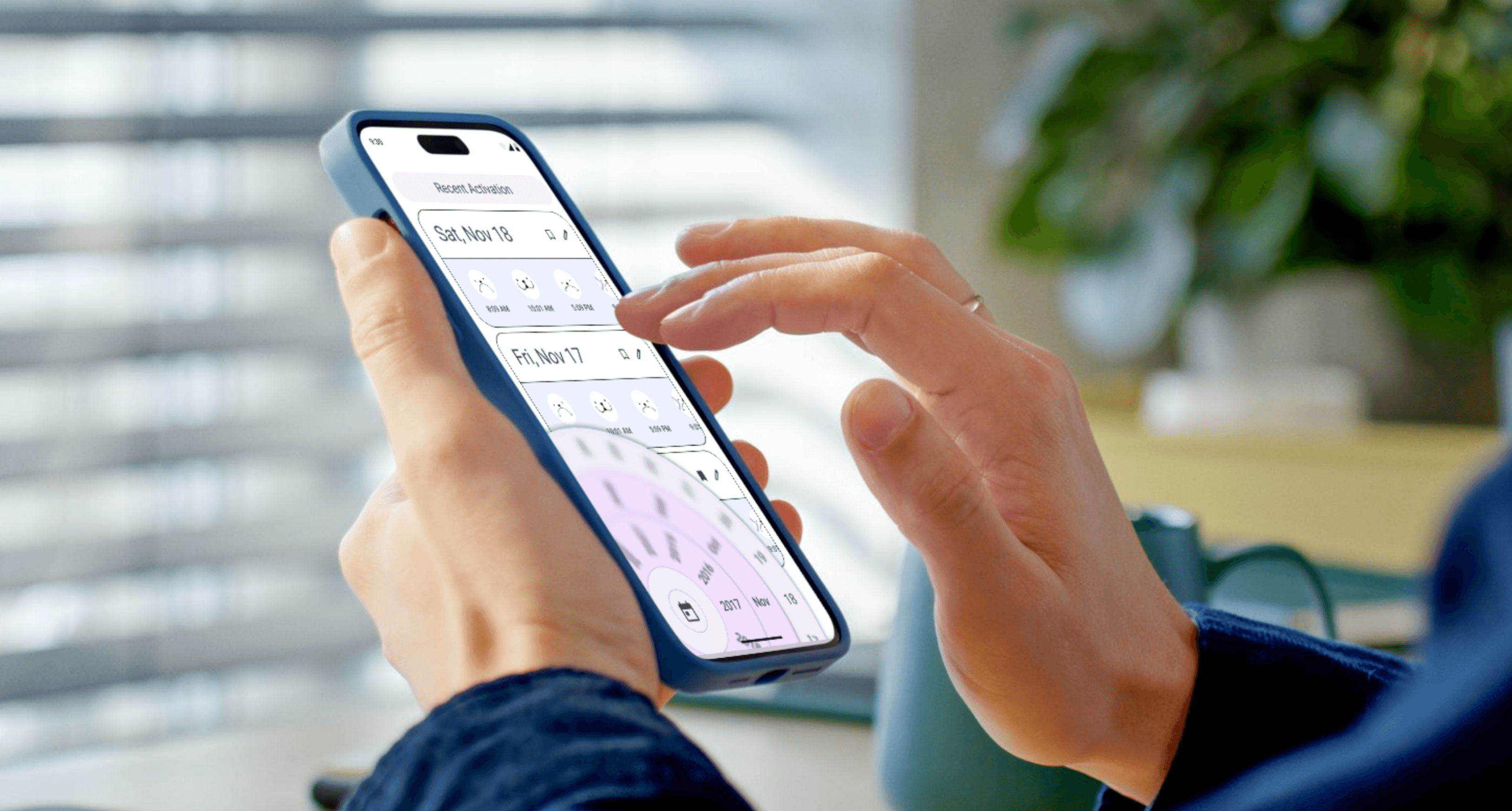
The app centralizes data control. An automated calendar logs usage to track dysregulation events. Parents manage AI training data and privacy settings. The interface allows review of interaction logs and haptic customization.
Data Privacy + Customization through WUF App
The app centralizes data control. An automated calendar logs usage to track dysregulation events. Parents manage AI training data and privacy settings. The interface allows review of interaction logs and haptic customization.
Edge AI + Data Ethics
Ethically sourced AI models detect dysregulation using audio and motion data. Lightweight AI architecture ensures entirely offline operation.
Check out the link below for an example of how audio and speech data sets can be utilized to understand emotion and psychology.
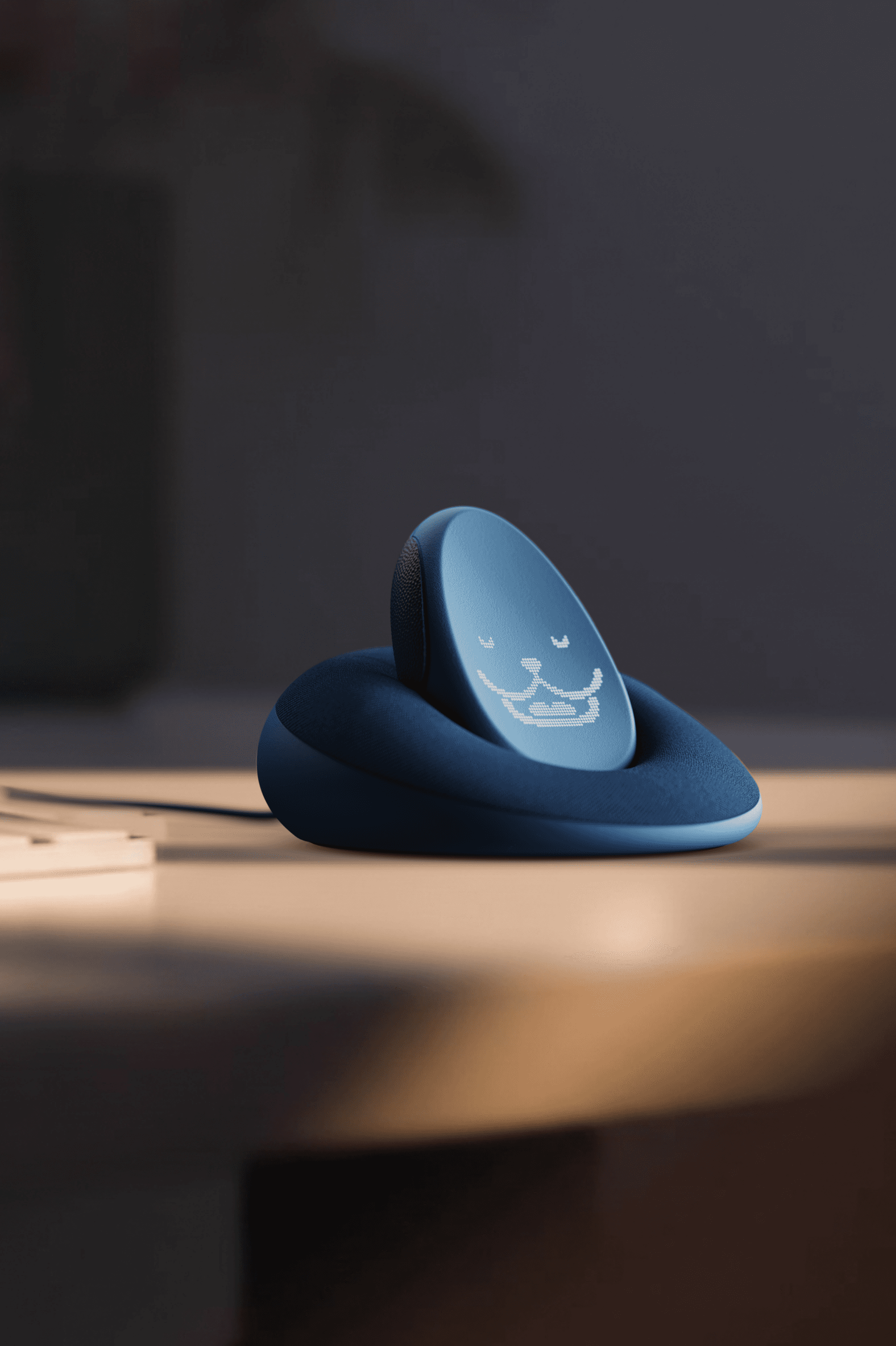
The charging base maintains the smooth pebble form language. Fabric surrounds the silicone charging points to create a cozy, home-like feel.

Narrative Continuity in Product Peripherals
A wireless charging base mimics a dog bed.
This maintains narrative immersion and character
identity for child users.
Narrative Continuity in Peripherals
A wireless charging base mimics a dog bed.
This maintains narrative immersion and character identity for child users.
The charging base maintains the smooth pebble form language. Fabric surrounds the silicone charging points to create a cozy, home-like feel.
sorry, not optimized for small windows,
try going full screen.
sorry, not optimized for large windows,
try going smaller.